
The decarbonisation of the built environment is central to global efforts to mitigate climate change.
With operational emissions from buildings contributing approximately 28% of total global carbon dioxide emissions (according to the Global Alliance for Buildings and Construction), innovative technologies are required to address both energy efficiency and carbon reduction at scale.
Sophisticated specialist cloud-based energy management systems are emerging as key enablers in the drive to net zero within the multi-occupancy buildings sector (PBSA, BTR, Co-Living, Hotels etc.).
For these operators where electric-based heating and hot water loads are significant, the decarbonisation of the grid will provide benefits from lower Scope 2 emissions. However, intelligent building control systems will identify internally where targets are not being met and improvements can be made – for example, energy waste through heating empty rooms, or while windows are open.
A Technical Overview
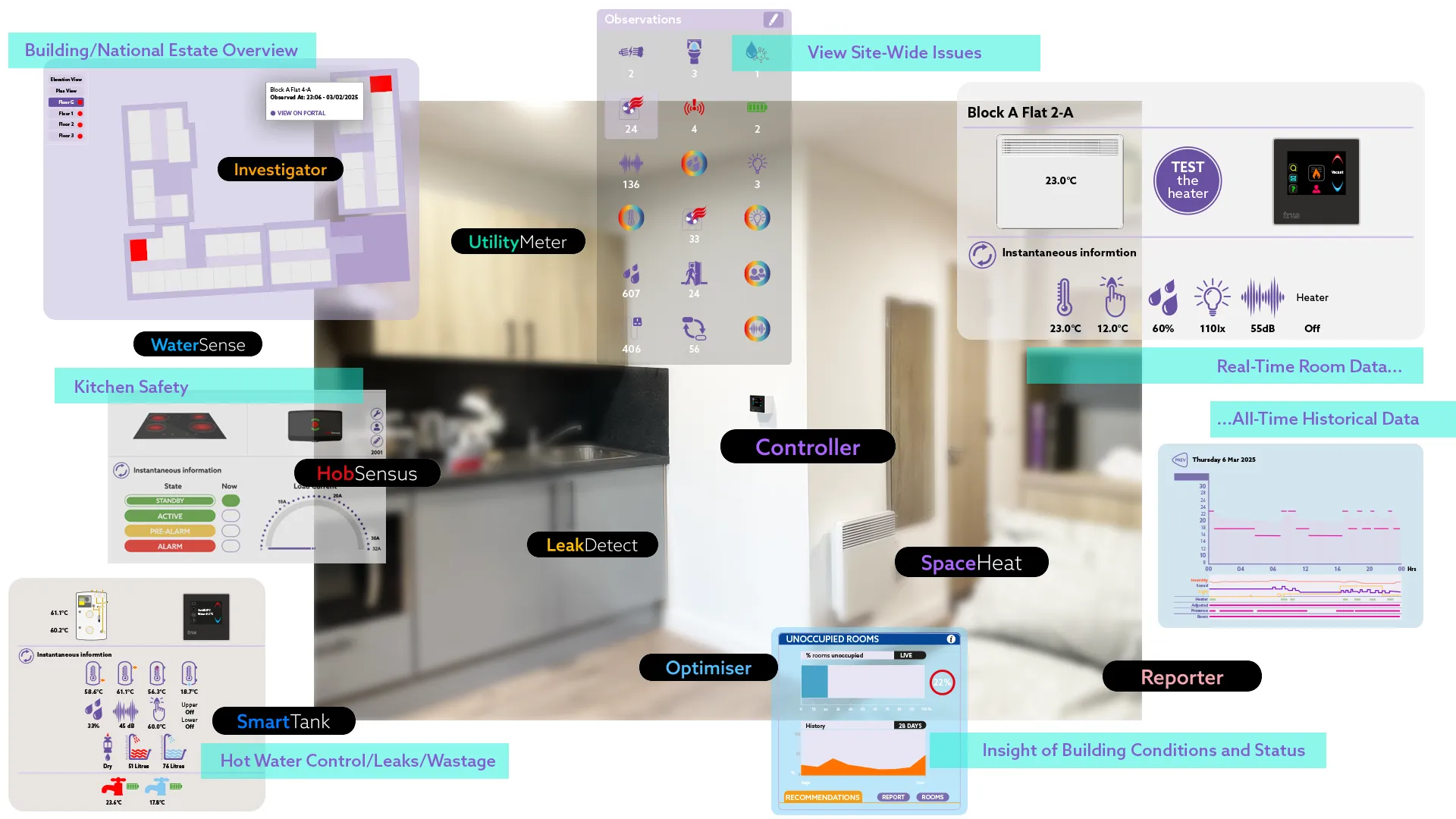
Functioning as a centralised IoT-driven control platform that integrates multiple data streams from across a building’s infrastructure, these systems primarily focus on space and water heating, traditionally the most energy-intensive aspect of building operations.
Key technical components include:
- Individual room environmental sensors and control: Temperature, occupancy, humidity, light, sound pressure and CO2 sensors integrated within the room controller feed real-time environmental and behavioural data into a central control Portal.
- Data. Insight. Action: Historical and real-time data is analysed to optimise setpoints, modulate heating loads, and minimise unnecessary energy expenditure.
- Cloud-based Analytics Engine: Bespoke software tools process vast amounts of data, providing continuous optimisation.
- API Integration: Could enable seamless interoperability with existing Building Management Systems (BMS) and other platforms, renewable energy assets, and external data sources (including weather forecasts).
Decarbonisation Mechanisms
Demand-Responsive Heating Control
Traditional time-based heating schedules often fail to reflect actual occupancy and usage patterns, particularly in student accommodation, leading to substantial energy wastage. This tech uses real-time occupancy detection to enable demand-led heating control, ensuring that rooms only use energy when required. This granular control reduces both energy consumption and peak load demand.
Adaptive Setpoint Optimisation
Temperature setpoints are adjusted within defined comfort bands based on variables such as external temperatures, occupancy, and interaction with the system by the room occupant.
Predictive Maintenance and Fault Detection
By monitoring equipment performance trends, anomalies can be identified – indicative of equipment inefficiency or impending failure, enabling proactive maintenance. This optimises asset life cycles and avoids the carbon costs associated with inefficient equipment operation.
Quantifying the Impact
Prefect Controls Irus system has shown operational energy savings in the range of 30–35%, with heating load in some cases reduced by as much as 50%, depending on building type and baseline system efficiency. These savings directly translate to substantial CO₂e reductions, contributing materially toward corporate ESG reporting, regulatory compliance, and sustainability certifications such as BREEAM and GRESB.
For large building portfolios centralised control and data aggregation facilitates portfolio-wide energy optimisation strategies, consistent reporting frameworks, and the ability to benchmark asset performance across multiple sites.
Enabling the Transition to Net Zero
Intelligent building control exemplifies the convergence of IoT, cloud computing, and AI-powered control in delivering practical decarbonisation pathways for the built environment. By enabling precise, responsive and predictive control of building systems, it empowers facilities managers, energy consultants, and sustainability professionals to reduce operational carbon footprints while maintaining occupant comfort and operational resilience.
As regulatory pressures tighten and the financial implications of carbon-intensive operations grow, the integration of intelligent control systems will become an increasingly indispensable component of net zero building strategies.
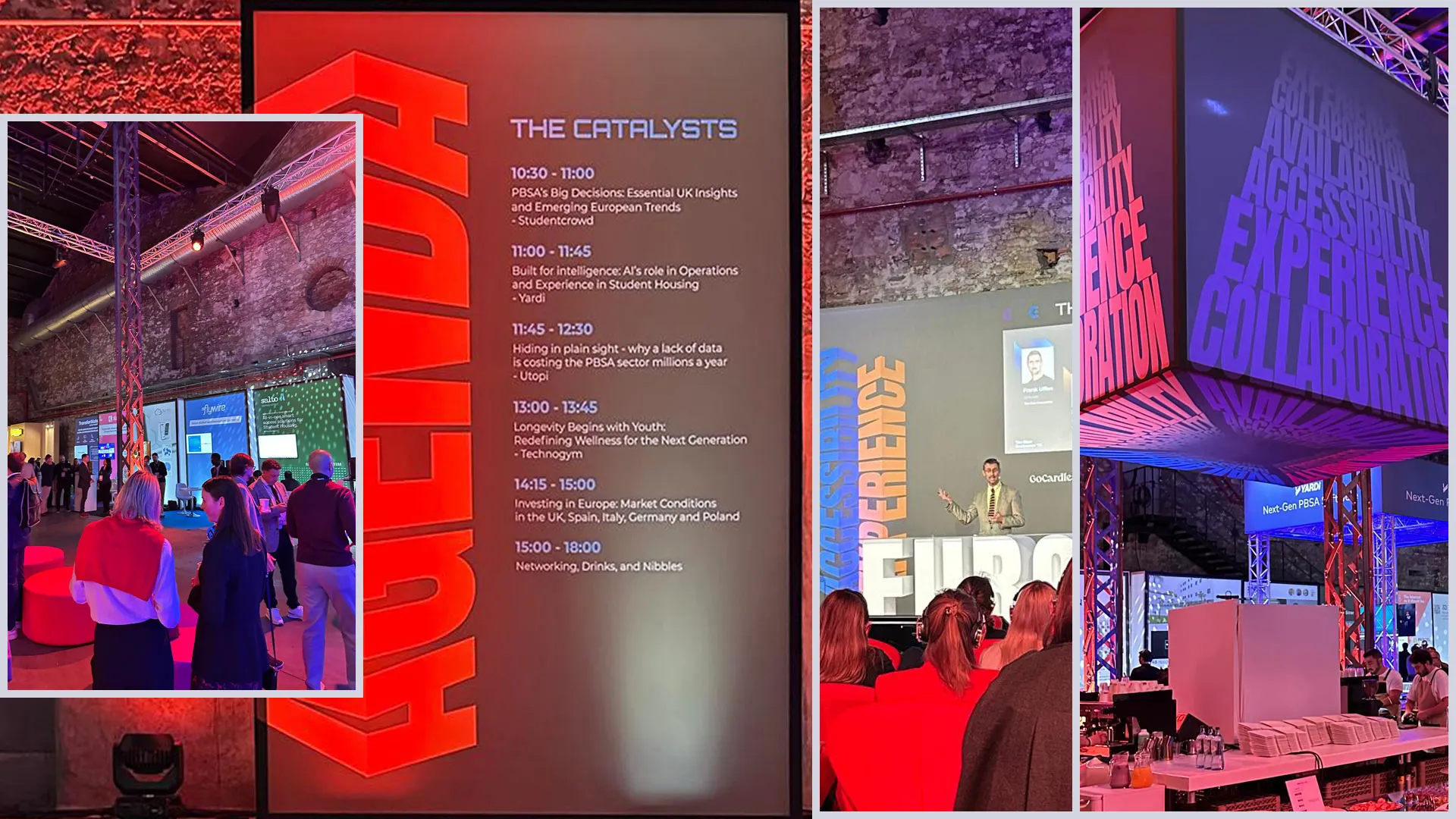
Will Mills, Prefect Controls MD recently attended the Class Foundation Conference in Lisbon, he commented,
“The discussions in Lisbon were around PBSA becoming intelligent, responsive living environments. How a real-time management and control, smart infrastructure and operational intelligence should support student living. Our Irus system couldn’t be more on point – weaving itself into student living design, real-estate strategy, and asset-management.”
Enabling the Transition to Net Zero
Intelligent building control exemplifies the convergence of IoT, cloud computing, and AI-powered control in delivering practical decarbonisation pathways for the built environment. By enabling precise, responsive and predictive control of building systems, it empowers facilities managers, energy consultants, and sustainability professionals to reduce operational carbon footprints while maintaining occupant comfort and operational resilience.
As regulatory pressures tighten and the financial implications of carbon-intensive operations grow, the integration of intelligent control systems will become an increasingly indispensable component of net zero building strategies.