
Student halls and Purpose-Built Student Accommodation (PBSA) present unique challenges for estates and facilities teams. Unlike conventional housing, occupancy is irregular and unpredictable. Residents may be away for days or weeks, only to return and demand instant comfort. Heating, hot water, and ventilation must be responsive, but without becoming a drain on energy or maintenance budgets.
At the same time, operators face growing pressure to meet net-zero carbon commitments while delivering healthy, safe environments for residents. Traditional heating strategies, often based on fixed schedules or manual intervention, are no longer fit for purpose. This is where new generations of intelligent room control systems are proving transformative.
The Challenges of Multi-Occupancy
Irregular Occupancy – Student bedrooms can sit empty over weekends or vacation periods, yet heating continues to run. This not only wastes energy but undermines carbon reduction goals. When residents return to cold rooms, they often compensate by overheating the space, increasing demand.
Humidity and Damp – With ensuite bathrooms and limited ventilation, humidity builds quickly. If left unchecked, condensation leads to damp and mould, creating both wellbeing and maintenance problems.
Maintenance Bottlenecks – Without visibility into what’s happening in individual rooms, estates teams rely on reactive callouts or blanket inspections. Both approaches are inefficient, costly, and disruptive to residents.
Smarter Solutions Through Intelligent Control
Modern room control platforms such as Irus from Prefect Controls combine occupancy sensing, environmental monitoring, and centralised management to fine-tune building performance.
- Adaptive occupancy-led heating ensures that energy is only used when a room is occupied. Heating drops to a setback mode when empty but can be reactivated instantly by the resident. Open-window detection prevents waste during ventilation.
- Humidity monitoring enables proactive management of condensation risk, automatically adjusting ventilation or heating and alerting facilities staff when issues persist.
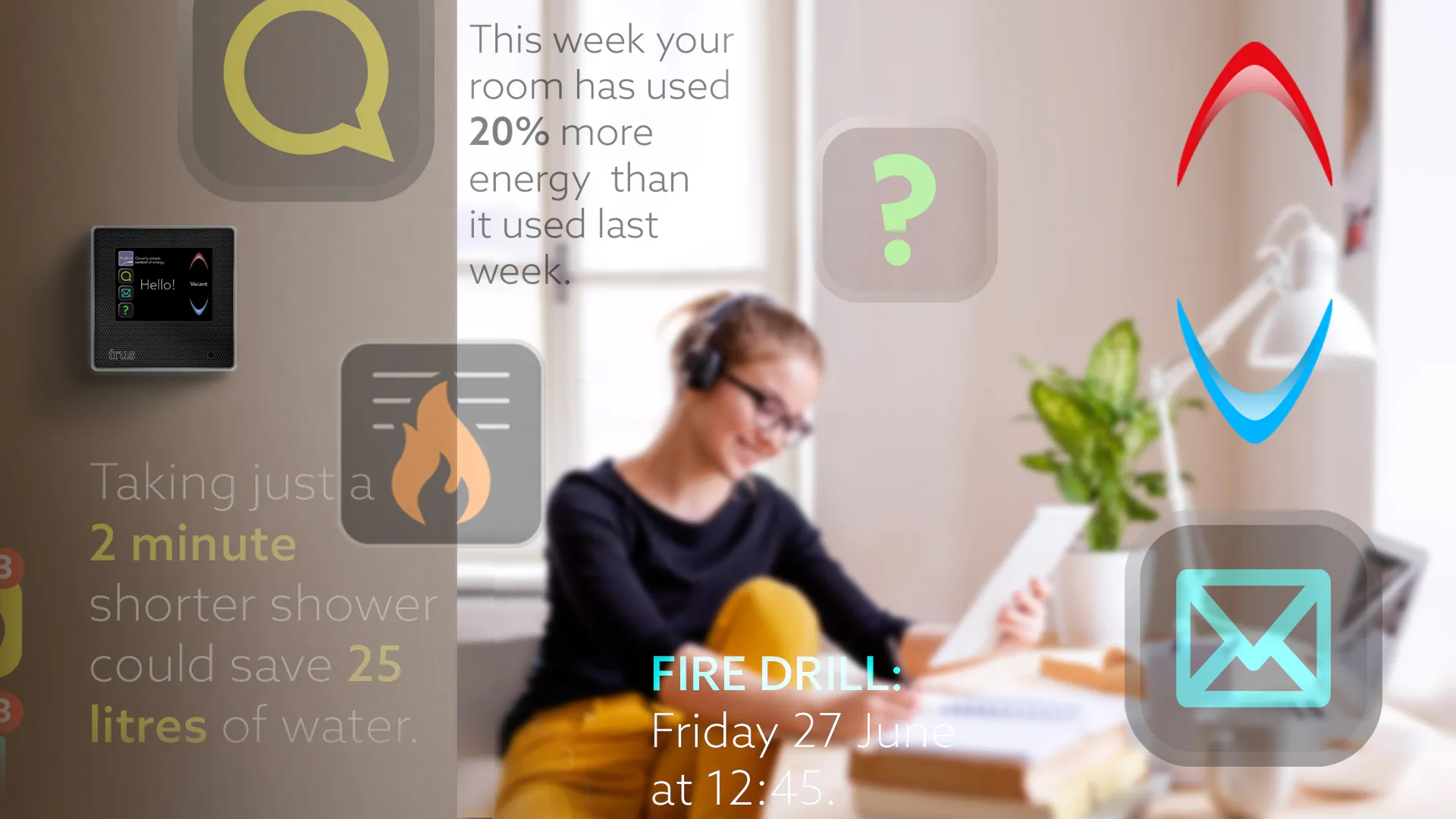
- Direct-to-room communication allows managers to send targeted messages, such as fire drill reminders, maintenance notices, or operational updates.
- Behavioural nudges encourage residents to make sustainable choices, such as moderating heating levels or shortening shower durations. Subtle prompts, tailored to real-time usage, can shift behaviour over time, embedding a culture of sustainability.
Behind the scenes, intelligent software tools analyse usage patterns, identify anomalies, and generate reports. Facilities teams gain a clear picture of where energy is being lost, where maintenance is needed, and how rooms, or indeed buildings, and even sites are performing compared with benchmarks.
Case Study Evidence
Recently two student residences in Leeds and Southampton showed heating loads cut by 50% – saving £70K and £122K respectively, as a result of the Irus intelligent control system installation, savings are largely due to reduced waste in unoccupied rooms.
Simultaneously, humidity monitoring halved the number of condensation-related maintenance callouts, freeing estates staff to focus on planned improvements. Residents reported improved comfort and communication, with fewer disruptive inspections.
Delivering on ESG Targets
For higher education estates, the benefits are twofold:
- Operational efficiency – Lower energy consumption reduces utility costs and allows estates teams to allocate maintenance resources more strategically.
- Sustainability outcomes – Significant reductions in carbon emissions can be reported with confidence, directly supporting institutional net-zero pathways.
- Student wellbeing – Comfort, air quality, and communication improvements enhance the residential experience, reducing complaints while supporting retention.
The Future of Multi-Occupancy Management
As the higher education sector continues to balance rising energy costs with ambitious sustainability goals, intelligent control systems are moving from optional upgrades to essential infrastructure.
By aligning occupancy, comfort, and carbon savings, these systems demonstrate how challenges in student accommodation can be turned into comfort, compliance, and carbon savings, helping universities and operators of PBSA property deliver both operational resilience and sustainability leadership.
