
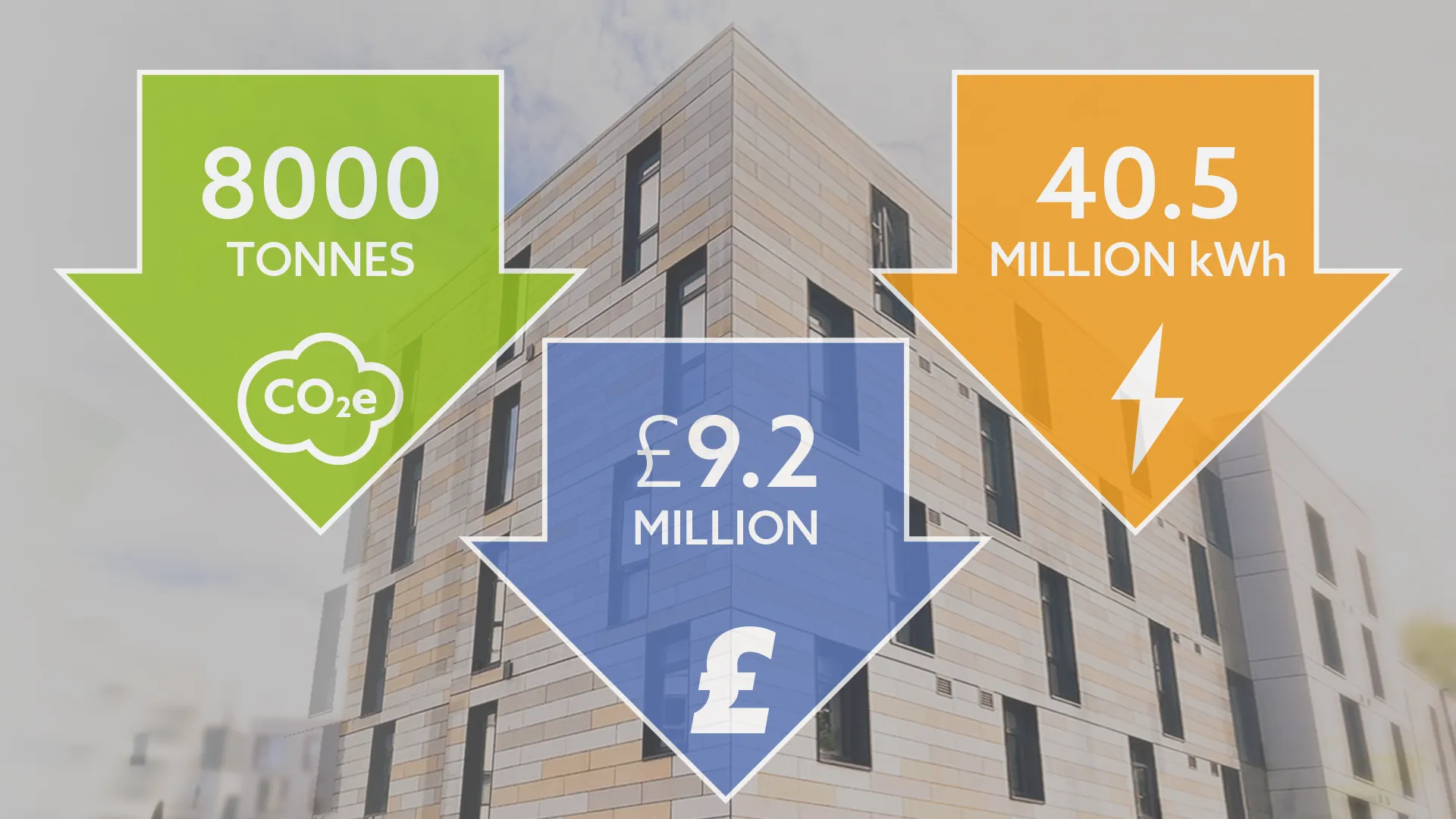
Prefect Controls’ Irus platform has prevented almost 40.5 million kWh of unnecessary energy use across the UK student accommodation sector during the past year, according to analysis of live system performance data.
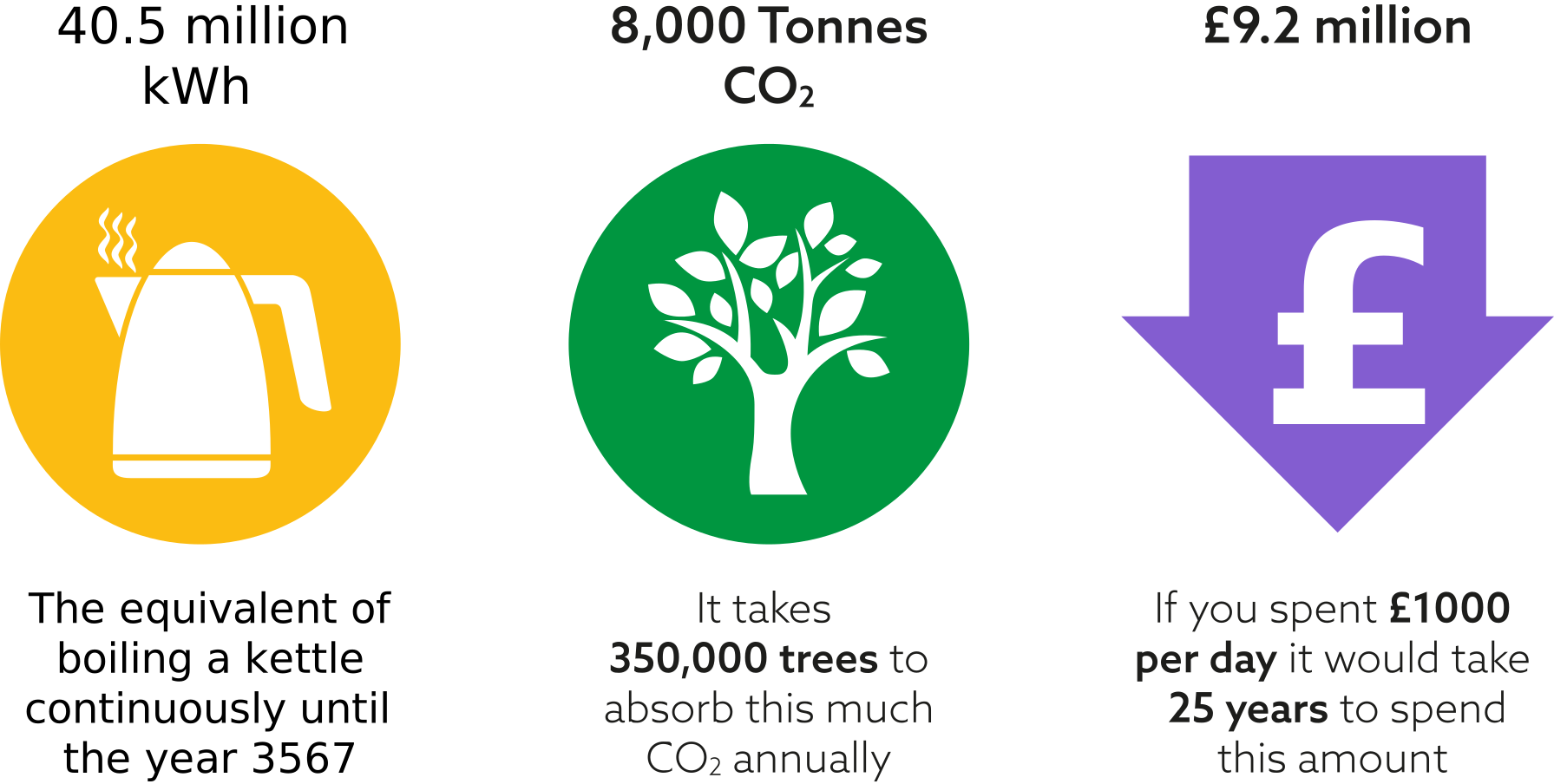
The figures, calculated on all occupied bedrooms connected to the Irus ecoSystem as of June 2026, reveal annual savings of 40,492,535 kWh, avoiding 7,985 tonnes of CO2e emissions and delivering a combined cost saving of £9,232,536 for operators.
Importantly, reductions are achieved without compromising student comfort.
Unlike systems that restrict heating availability, Irus focuses on eliminating unnecessary heat input. Students retain full control of their environment and can activate the system’s boost function whenever additional warmth is required.
Saving energy only when it is being wasted
Irus continuously analyses room conditions and occupancy, reducing energy input when bedrooms are empty or when windows are opened. As soon as occupants return or close the window, normal operation resumes.
This approach is based on a simple principle: heat should be available when it is needed and not wasted when it is not.
“These savings are not achieved by restricting heating,”
“The system simply prevents unnecessary energy consumption. Residents can always call for heat through the boost button whenever they want it.”
Adrian Barber, Head of Communications at Prefect
Real-world performance across the largest student accommodation dataset in the UK
There are more than 90,000 Irus control units installed, some deployed in communal areas or controlling services other than heat sources. This latest analysis focuses on live bedrooms controlled by the Irus Portal and comprises both electric panel heaters and ‘wet’ radiators.
Performance calculations are based on post-installation analysis from representative portfolios:
- Electric heating averaged 609 kWh per bed reduction, based on 6,474 bedrooms.
- Wet heating averaged 815 kWh per bed reduction, based on 2,007 bedrooms.
Using electricity prices of £0.256/kWh and gas prices of £0.065/kWh, the resulting annual savings across the platform amount to £9.2 million.
Occupancy intelligence rather than restriction
The PBSA sector has long recognised that occupant behaviour has a major influence on building performance. Heating empty rooms, spaces where windows are open, and the use of prohibited supplementary heaters are all situations that create avoidable energy demand and unnecessary carbon emissions.
Responding automatically to real-world conditions – by physically turning heat sources off and on – Irus ensures that energy is only consumed when it delivers genuine value.
“The scale of these figures demonstrates just how much avoidable energy consumption still exists. As the sector works towards net zero, technologies that eliminate waste while maintaining comfort will play an increasingly important role in delivering both environmental and commercial performance.”
“The most important point is that there is no restriction of heating or limiting residents’ ability to keep their rooms warm. Irus simply prevents waste rather than denying heat.”
“Students remain in complete control whenever they want additional warmth. That balance between wellbeing and sustainability is critical. Intelligent controls enhance the resident experience while helping operators reduce carbon emissions and running costs.”
Gareth Chaplin, Head of Energy & Sustainability at Prefect
Supporting net-zero ambitions
Using Department for Energy Security and Net Zero (DESNZ) carbon factors for 2025, the reduction in energy consumption equates to 7,985 tonnes of CO₂e emissions avoided.
Prefect believes the latest figures demonstrate that intelligent occupancy-based control can provide one of the most effective routes to improving building performance while maintaining comfort and student satisfaction.
As energy costs remain volatile and net-zero commitments become increasingly demanding, preventing unnecessary energy consumption, not restricting heating, may prove to be one of the most important principles in the future of controlling student accommodation energy consumption.
