
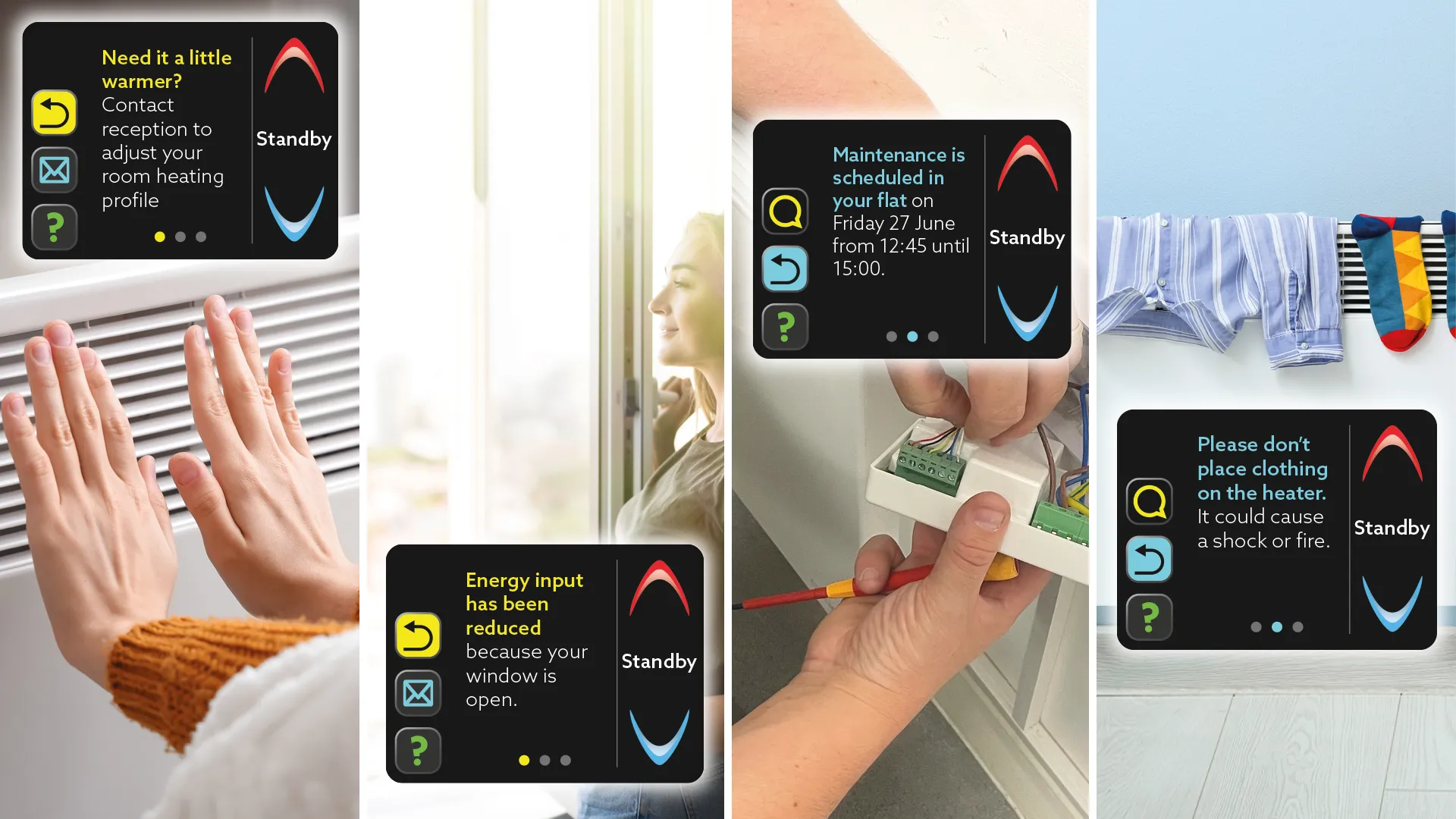
How Prefect Irus is transforming resident engagement.
Achieving net zero in student accommodation requires more than efficient buildings. While smart technologies can significantly reduce energy demand, occupant behaviour remains one of the biggest influences on energy consumption, water use and overall environmental performance.
Historically, resident engagement has relied on posters, emails and awareness campaigns that are easily overlooked. Irus is changing that.
Turning room Controls into a resident engagement platform
With the launch of ControlSensor, Prefect introduced the Irus Behavioural Sustainability Initiative, bringing a new capability for real-time resident engagement within the Irus intelligent room sensor.
Through its Direct-to-Room Communications (DtRC) feature, operators can deliver timely, personalised messages directly to students within their rooms, encouraging positive behaviours that support ESG objectives and carbon reduction goals.
Unlike conventional communications, these messages are delivered when they are most relevant and most likely to influence behaviour.
Energy saving comes as standard
The Irus platform already delivers significant savings through intelligent control strategies that:
- Reduce heating energy to unoccupied rooms.
- Lower energy input when windows are open.
- Optimise domestic hot water production.
- Improve overall building efficiency.
The addition of DtRC introduces a further layer of energy and resource savings by encouraging better everyday choices and promoting greener habits.
A smarter approach to sustainable living
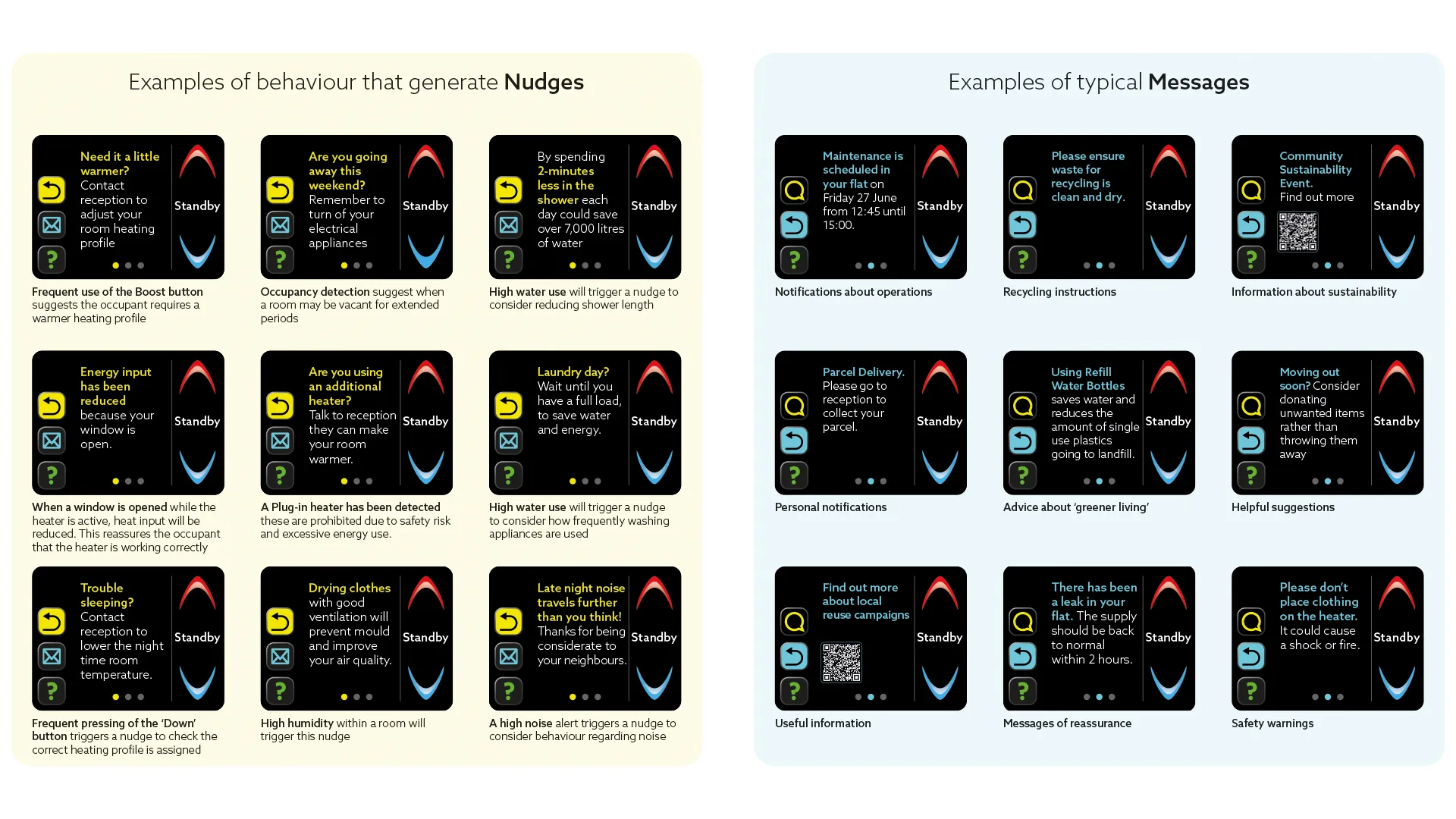
Using environmental and occupancy intelligence, Irus delivers contextual messages and behavioural nudges based on actual room conditions.
Examples include:
Energy efficiency
- Suggesting profile adjustments when boost heating is used frequently.
- Encouraging residents to switch off appliances before leaving rooms for extended periods.
- Reminding students that heating input reduces automatically when windows are open.
Water Conservation
- Encouraging shorter showers through comparison with anonymous average usage.
- Promoting refillable water bottles.
- Suggesting dishwashers and washing machines are used only when full.
Healthier indoor environments
- Advising residents when humidity levels become elevated, helping prevent condensation and mould.
- Encouraging better ventilation and healthier living conditions.
- Supporting comfort and wellbeing through guidance based on temperature and air quality.
Waste reduction
- Delivering recycling reminders.
- Supporting reuse and donation campaigns during move-out periods.
- Encouraging responsible disposal and reducing landfill waste.
Community wellbeing
- Promoting considerate living through noise awareness.
- Providing leak alerts and emergency information.
- Communicating maintenance schedules, fire alarm tests and parcel notifications without printed notices.
- Promoting sustainability events and community initiatives.
Combining building intelligence with behavioural science
The Irus Behavioural Sustainability Initiative represents a fundamental shift in how sustainability is delivered within PBSA.
Rather than relying on passive awareness campaigns, Irus creates continuous engagement through personalised, real-time interventions that embed sustainability into everyday resident behaviour.
By combining intelligent building data with behavioural science principles, Prefect addresses the human element of building performance, an area often overlooked despite its significant impact on energy and resource consumption.
Importantly, this approach is highly scalable. Operators can deploy campaigns instantly across entire portfolios without additional hardware, printed materials or manual communication processes.
Supporting net zero ambitions
The initiative complements existing energy-saving technologies by empowering residents to become active participants in achieving environmental goals.
With heating demand already optimised by the Irus platform, resident engagement focuses on reducing plug-load and lighting consumption. These behavioural interventions can typically deliver a further 5–10% reduction in non-heating electricity use, while helping cultivate lifelong sustainable habits.
The impact of the wider Irus platform is already substantial. This year alone:
- 40.5 million kWh of heating energy has been saved.
- 8,000 tonnes of CO₂ emissions has been avoided.
- £9 million+ energy savings.
Delivering meaningful action
Meaningful environmental progress is not solely about smarter buildings; it is about enabling smarter behaviours.
By transforming room controls into a digital engagement platform, Prefect Controls has created an innovative and scalable solution that empowers students to make more sustainable choices, supports operators in delivering ESG objectives and contributes to lower-carbon, healthier and more resilient student communities.
Because achieving net zero is not simply a technology challenge. It is a people challenge too.
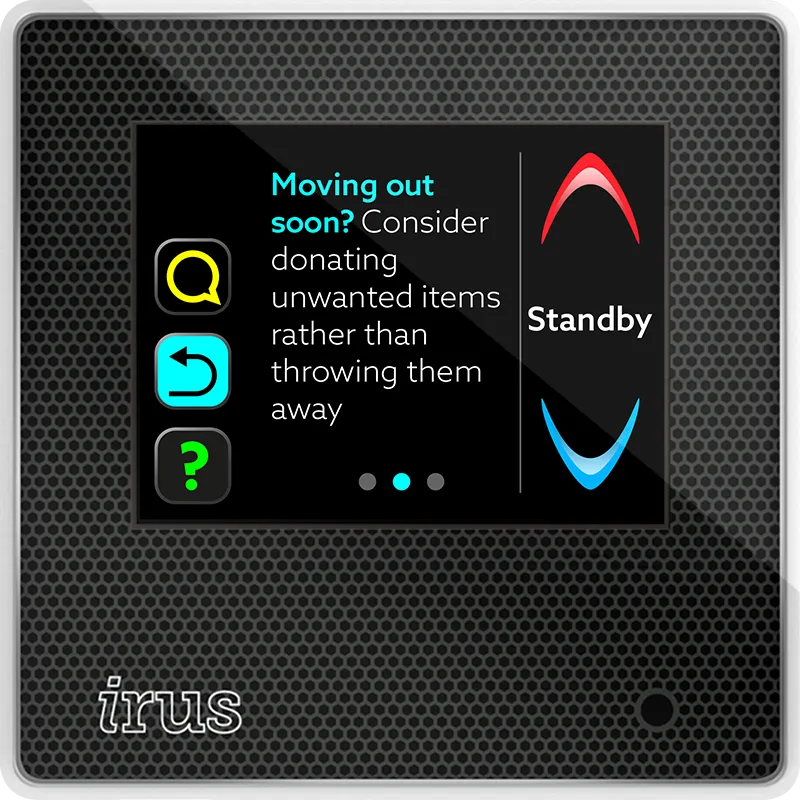
Messages and Nudges are pre-agreed and can be sent to individual rooms or broadcast to an entire estate. Nudges are auto-generated as a result of room conditions and the occupants interaction with the ControlSensor, for example if they use the Boost feature frequently, a nudge asking whether they would like their heating profile ajusted will be displayed, or if the hunidity level rises to an unusual level and automatic advice Nudge will appear suggesting better ventilation practices are adopted.
Likewise, messages about maintenance scheduling can ask that rooms are made available at certain times, or suggestions regarding recycling unrequired equipment can be sent to occupant that may be moving out.
